


The causes of osteocondrosis of the spine of the spine are not quite clear.The greatest significance of the inheritance of the inheritance and changes starting on intervertebral disks relative to age.
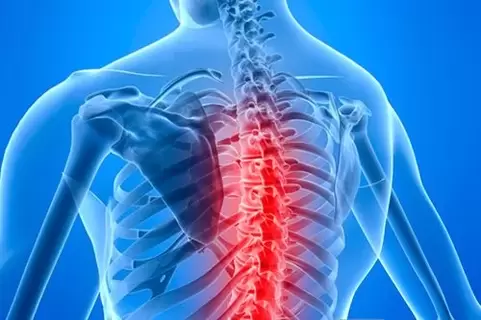
Osteocondrosis of the thoracque spine: symptoms.
The first stage of neurological complications of the osteocondrosis of the spine of the spine.
Clinical manifestations are associated with reflex muscle tension.Dorchago (Torakal background).Acute pain in the thoracal region associated with the actions.Amperbation begins suddenly.The volume of movements in the thoracic spine is severely limited.Paravertebral muscles of "stone" density.The spread of Dorsagon with sufficient treatment is not more than 7-10 days.
Dorsalgia (back pain).Paceners complain of paceners who complain during movements or in a certain situation, during or in a certain situation during the actions or in a certain situation.The beginning is usually gradually.Clinically, the tension and pain of the torakal spine, the tension and pain of paravertebral muscles are often determined.In most cases, the pain lasts 2-3 weeks, but can take a chronic course unless treated.
Pettery (chest pain).Breast pain is one of the most common complaints to patients to the doctor.In this case, the differential diagnosis is carried out with cardiological diseases (angina pectoris, myocardial infarction).
Often chest pain occur in the background of osteocondrosis of the thoracic spine.Pain is deep, broken, aching, shows, movements, movements, or stretching in a position.In the Torakic region, the movement is tense and painful on the caraverebral muscles.
Anteror chest wall syndrome, stupid, aching, long pains on the front surface of the chest, strengthens during hand movements with the turns of the body.Nitroglycerin does not stop pain in the language.Cry points are found in large and small chest muscles.
The second stage of neurological complications of the osteocondrosis of the spine.
Thoracic a hernia with a radicular syndrome of the spine is extremely rare.This is due to the structure of the structure of the thoracum spine.Compressing the spine (or intercostal neuralgia), firing, burning the pain of a corner of the surrounding character and burns along the intercostality.The pain is strengthening while moving while breathing.
Often the nipple radio syndromes are accompanied by pain in various internal organs.In case of damage to the upper thoracon, patients complain in the throat and in a compression in the throat and the sternum in the throat and the sternum.The presence of unpleasant feelings in the field of a farren or esophagus for a long time, many additional exams and consultations lead to the development of neurotic reactions.
Patients in patients damaging medium illness occur in the stomach.Often the pain is accompanied by numbness in the front abdominal wall.The pain can simulate the intestinal pathology of pain with the pathology of the roots.Sometimes the pain in the abdomen is so intense that patients are unreasonable for a liar.
The defeat of the 7, 8 or 9 in the right can imitate the pathology of the gallbladder or liver.Approaching, stupid pains are localized in the right hypochondria.Boli and paresthesia, when the thorakal spine movements are clearly related to the thoracic spine, the breast roots stretches with a long seat, cough or sneeze.
The third stage of the neurological disorders of the osteocondrosis of the thoracque spine.
Vein-brown conflict.Shoulder plexus with small chest muscle syndrome, squeezed subclavian artery and vascular.This can cause a strong stolen of the hand of compression of these forms.Patients live brushing on the front chest wall during the night movements, burning pain.In this case, the paresthesia, numbness, weakness and pain occur in hand.In the palpation, the trigger points in the territory of small breast muscles are determined.An important differential diagnostic test is to eliminate pain after the blockade of muscles.
The fourth stage of the neurological complicity of the osteocondrosis of the waist.
Breach of blood supply to the spinal cord.The thorax level is rare to the level of chronic myelopathy, the anatomical features of the spine.However, a narrow waist can squeeze the brain of the disk with a disk.The disease gradually begins weakness in the legs, reducing sensitivity in the lower half of the body, the impairment of pelvis bodies.
The sharp cerebrovascular disorder is the most severe aggravation of nipple osteocondrosis.Suddenly, against the background of pain syndrome, the paralysis of the feet, the impairment of the pelvis organs.
Examination of patients with osteocondrosis of the Torakic region.The analysis of the complaint and history is of great importance to rule out serious pathology.A neurological examination is carried out to damage the roots and spinal cord.Manually, the exam allows you to restrict the source of pain, motility, limiting muscle spasm.
Additional exam methods are displayed when there is a doubt of special back pain.If somatic pathological suspects are suspected, a comprehensive clinical examination (ECG, lungs, fgds, ultrasound of the abdomen, etc.).
The ray of the thoracic spine was designated to exclude tumors, spinal injuries, infections, and the show.X -Ray Osteocondrosis has no clinical value because it is all older and older.
With radical or spinal symptoms, the thorakal spine is displayed in the rendering of a MR or CT.In one MRI, the hernia and spinal cord are better visible and bone structures in CT.The clinical value of the finds and the MRI must be compatible with each other.
Osteocondrosis of the thoracque spine: Treatment.
During the acute period, the limitation of physical activity in the presence of intense pain is shown.It is recommended to gradually expand engine mode with the reduction of pain severity.A sudden rotation movement in the thoracic spine should be prevented.
Intracanic electric stimulation, acupuncture, Hirudotherapy, massage, hand therapy are effective.Drug treatment.With acute pain, non-intrusive anti-inflammatory drugs are shown.Along with anti-inflammatory drugs, miradelakants can be assigned with the participation of muscle spasm.
The thoraki waist, local anesthesia (Lidokaine, prokain), with the osteoputic blocking of the therapeutic block, Non-Metrital Antiflamativator Medicines (Lorokseroids), corticosteroids (Betamethason) are effective.Medicinal mixtures are presented as close as possible to the center of pain.
The intercostal nebrigia, antidepressants, anticonvulsa, a patch is also shown in a comma.Porty Drugs (Pentoxifillin, Aminophilline), Group B, B, Group B, BROUGH, Surgical treatment with the symptoms of the spinal cord (lower extremities, impaired urine and feces).
PreventionOsteocondrosis of the Torakic region is decreasing to prevent long, uncomfortable positions while working on the table.It is important to visit the workplace properly, alternative labor and rest periods, regular physiotherapy exercises, 1-2 times a week.